


Category of Astronomical Heritage: tangible immovable
Astronomic Observatory of Professor Manuel de Barros, Porto, Portugal
Description
Geographical position
Astronomic Observatory of Professor Manuel de Barros --
Observatório Astronómico do Monte da Virgem (Faculty of Sciences of the University of Porto),
Alameda do Monte da Virgem, 4430-146 Vila Nova de Gaia, Portugal
Location
Latitude 41.106771 N, longitude 8.589441 W. Elevation ...m above mean sea level.
IAU observatory code
-
Description of (scientific/cultural/natural) heritage

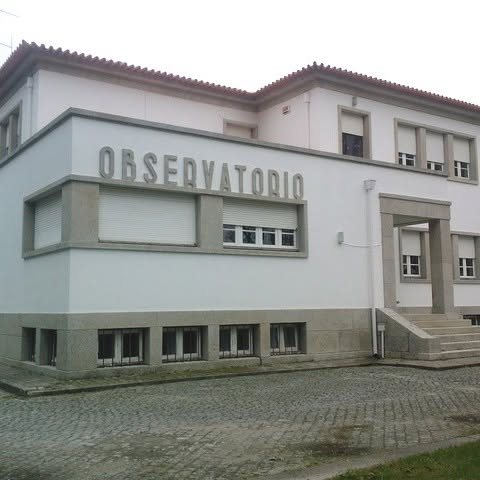
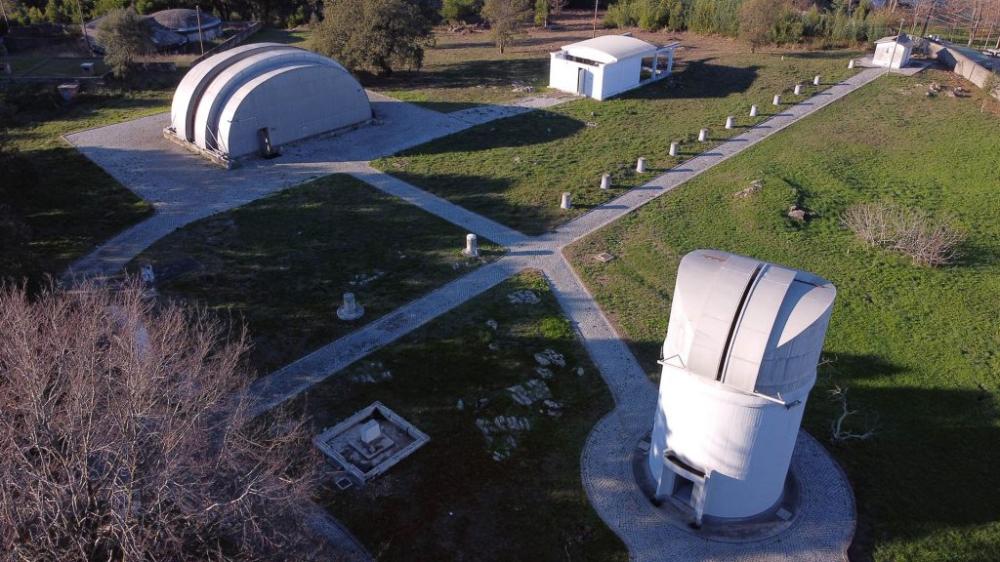
Astronomic Observatory of Professor Manuel de Barros (OAPMB) in Vila Nova de Gaia south of Porto
The Astronomic Observatory of Professor Manuel de Barros (OAPMB) in Vila Nova de Gaia south of Porto, on Alameda do Monte da Virgem, was etablished in 1948 to meet the needs of Mathematics and Geographic Engineering students in Astronomy classes.
The name of the Observatory is due to Manuel Gonçalves Pereira de Barros (1908--1971), a professor of the Faculty of Sciences of the University of Porto (FCUP) committed to setting up an Observatory at the University of Porto where students could study Astronomy. He acted as director until 1968. Following his death, the observatory, he had founded, was named after him.
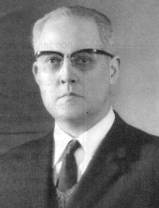
Fig. 2. Manuel Gonçalves Pereira de Barros (1908--1971), (University of Porto)
Biography of the founder of the observatory Manuel de Barros
Manuel Gonçalves Pereira de Barros (1908--1971) completed his studies between 1920 and 1927 at the Liceu de Sá de Miranda, in Braga. Then he continued his studies in Mathematical Sciences at the Faculty of Sciences of the University of Porto, where he graduated in 1931. He attended the Civil Engineering course between 1931 and 1934 at the Faculty of Engineering of the University of Porto. Finally, in 1944, he was awarded the degree of Doctor, published under the title "Photographic Record of Meridian Observations", in which he studied a photographic micrometer for the Faculty of Science's meridian circle.
In 1932, he was appointed as an extraordinary assistant in the 1st Group of the Mathematical Sciences Section at the Faculty of Sciences. In 1933, he was hired as an assistant for the 2nd Group of the Mathematics Section -- until 1941. In 1945, he assumed the position of 1st Assistant, taking charge of theoretical courses in Precision Drawing, Machine Drawing, Astronomy, Topography, and Geodesy.
In 1961, he became full professor of the 2nd Group, 1st Section of the Faculty of Sciences, and during the 1960-1961 academic year, he was awarded the title of associate, later full professor of Mechanics and Astronomy.
A grant enabled him to undertake research at the Greenwich Observatory in 1946, where he met astronomer Robert d'Escourt Atkinson (1898--1982), who has developed in the 1940s and 1950s an innovative design that replaced the traditional refracting telescope with a flat quartz mirror on a steel axis. Thanks to his efforts in the technological development of the Mirror Meridian Circle (1957), he collaborated with several astronomical observatories -- notably those in Greenwich, Pulkovo, and Ottawa, where he worked in September 1961.
In 1948, he was appointed a member of the Portuguese Section of the International Astronomical Union (IAU) and the International Union of Geodesy and Geophysics. He participated in the General Assemblies of the IAU, held in Zurich (1944), Rome (1952), Dublin (1955), and Berkeley (1961).
He founded and directed the Astronomical Observatory built in Vila Nova de Gaia, on Alameda do Monte da Virgem -- a site visited and approved in 1943 by the British Astronomer Royal, Sir Harold Spencer Jones (1890--1960). At this observatory, he coordinated the installation of the equipment, and designed astronomical instruments.
During the final years of his life, he continued to contribute to the modernization of the Observatory's equipment, and to the study of astrophysics; to this end, he established a course in the field at the University of Porto and organized the "Summer Institute on Stellar Evolution and Variable Stars".
"Under Prof. Dr. Manuel de Barros -- while I was an astronomy student at the University of Porto some thirty years ago, I learned to observe distant stars through the reticles of instruments-stars that began to shine as brightly for me there as they did in the poems of Guerra Junqueiro and Olavo Bilac. And I learned that the true world of science -- where distances are measured in light-years -- is just as wondrous as the world of beauty recreated by artists and poets. These are distances, finite or infinite, that only death can overcome. For, as Augusto de Castro says, 'Death is the only distance that brings men closer together'."
(Elogio Póstumo do Prof. Dr. Manuel de Barros por Paulo Pombo, seu antigo aluno, no jornal "O Primeiro de Janeiro", de 17 de Fevereiro de 1971).
History
Fig. 3. Mirror Meridian Circle of the Astronomic Observatory Porto (....)
Manuel de Barros supervised and constructed astronomical instrumentation. Especially he built up a Mirror based Meridian Circle, inspired by an idea of Herbert Hall Turner (1861--1930), assistant in Greenwich Observatory from 1884 to 1893. Traditional transit circles -- like the famous Airy Transit Circle -- rotated on a horizontal axis, which caused the telescope to flex and misalign with repeated use. Turner proposed utilizing a fixed mirror (often mercury) combined with horizontal telescopes to maintain unaltering, highly accurate reference planes.
In the 1940s and 1950s, Robert d'Escourt Atkinson (1898--1982) had developed the Mirror Transit Circle, published in 1947, in order to replace the traditional refracting telescope with a flat quartz mirror on a steel axis, aiming to eliminate the mechanical and level errors inherent in older transit circles. Atkinson's project was heavily prototyped by Grubb Parsons and tested successfully, but never constructed for Greenwich Observatory.
This Mirror based Meridian Circle (Círculo Meridiano de Espelho -- CME, 1949--1969) in Porto Observatory is one of the few instruments of this type installed in the World, cf. a similar instrument at the Ottawa Observatory (Canada), and another at the Pulkovo Observatory, Sankt Petersburg (formerly USSR).
It is an unusual instrument; its design choices-such as the rotating mirror and the two collinear observation telescopes-were carefully selected to address constraints arising from well-known instrumental challenges. This innovative instrument was used in Porto to perform astronomical observations up to the 1970s.
Instruments of Porto Observatory
- Mirror based Meridian Circle, Círculo Meridiano de Espelho -- CME (1949--1969)
- ....
Directors of Porto Observatory
- 1948 to 1968 -- Manuel Gonçalves Pereira de Barros (1908--1971)
- ....
State of preservation
The Astronomic Observatory of Professor Manuel de Barros is well preserved. The OAPMB was considered by the Management Institute of Architectural and Archaeological Heritage "as material testimony of the history and investigation of Astronomy in Portugal, as well as of the involvement and professional dedication of a scientist of national and international calibre as was Prof. Manuel de Barros, and for these reasons it was approved the establishment of an urban protection zone surrounding the Observatory."
The <i>Mirror based Meridian Circle</i> is nowadays of substantial historic and museologic importance, an integral part of the astronomy museum collection.
Comparison with related/similar sites
The remarkable invention in Porto Observatory is the Mirror based Meridian Circle -- nearly unique in the World -- two other instruments are in Ottawa Observatory (Canada), and at the Pulkovo Observatory, Sankt Petersburg (formerly USSR).
Threats or potential threats
no threats
Present use
The Astronomic Observatory of Professor Manuel de Barros, Faculty of Sciences of the University of Porto, is used for teaching and research activities in the areas of Earth, Space and Geographic Engineering Sciences.
It is also important for Public Outreach.
Astronomical relevance today
Porto Observatory is still used for Space and Earth Sciences:
1. Positioning and Satellite Navigation (with applications to Remote Detection, Geodynamics, Areal Gravimetry and Coast Monitoring);
2. Space Meteorology, with applications to the study of events involving energetic particles, supported by data gathered from space instrumentation as well as by the Observatory Radiospectrograph, instrument built locally with the collaboration of engineers from the Observatory of Nançay, France.
References
Bibliography (books and published articles)
- Høg, Erik: Modern Developments of the Meridian Circle. In: IAU Symposium, No. 61 (1974), p. 243-255.
- Spencer Jones, Harold: The Royal Greenwich Observatory. In: Proceedings of the Royal Society of London. Series A, Mathematical and Physical Sciences, Vol. 198 (August 15, 1949), No. 1053, p.141-169.
- Tucker, Roy. H.: Transit Circles Today. In: Quarterly Journal of the Royal Astronomical Society 10 (1969), p. 223-232.
Links to external sites
- Astronomic Observatory Professor Manuel de Barros
- Manuel Gonçalves Pereira de Barros (1908--1971) (Wikipedia)
- Antigo Estudante da Faculdade de Ciências da Universidade do Porto - Manuel de Barros
- Telescopes: The proposed Horizontal Transit Instrument & Mirror Transit Circle
- ADUP FCUP OA - Desenhos de projeto do Círculo Meridiano de Espelho [1949-1969]
Links to external on-line pictures
no information available