


Category of Astronomical Heritage: tangible immovable
Nice Observatory/Observatoire de la Côte d´Azur, Nice, France
Description
Geographical position
Nice Observatory/Observatoire de la Côte d’Azur (OCA), 96 Boulevard de l'Observatoire, CS 34229, F-06300 Nice (Nizza), France.
Observatoire de la Côte d'Azur (OCA) -- created in 1988, as a merger of the following observatories:
- Observatoire de Nice
- Centre de Recherches en Géodésie et Astrométrie (CERGA), 1988
Location
Latitude 43°43’24’’ N, Longitude 7°18’06’’ E, Elevation 372m (Mont Gros) above mean sea level.
IAU observatory code
020
Description of (scientific/cultural/natural) heritage
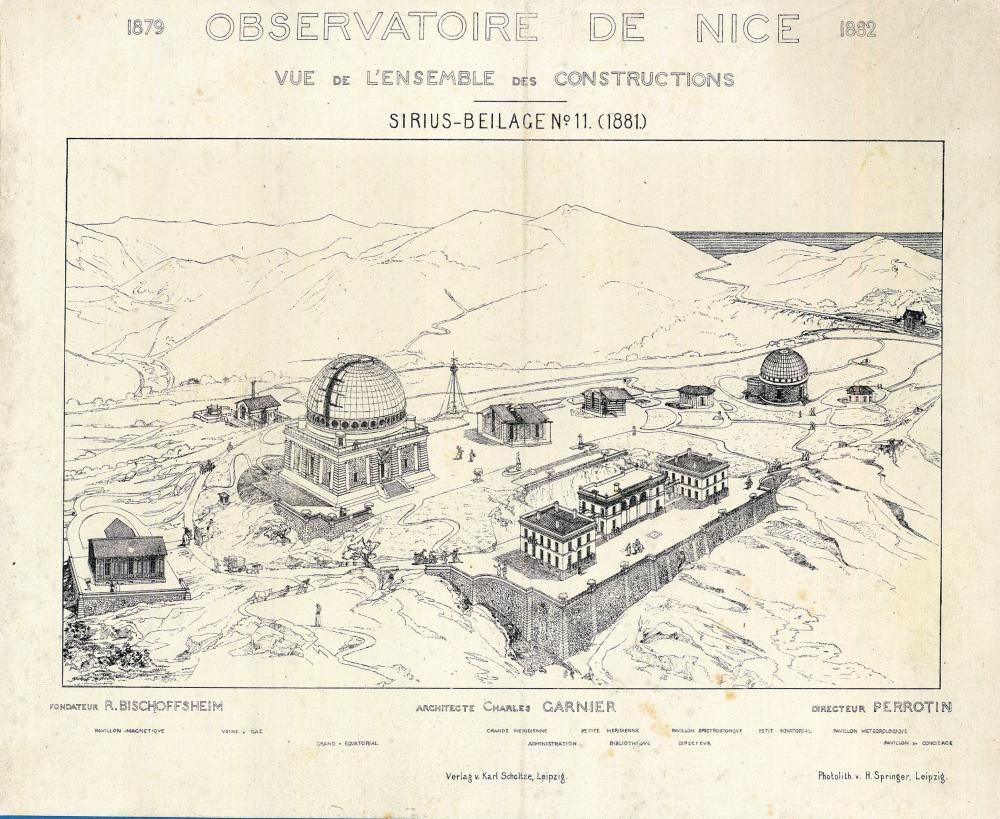
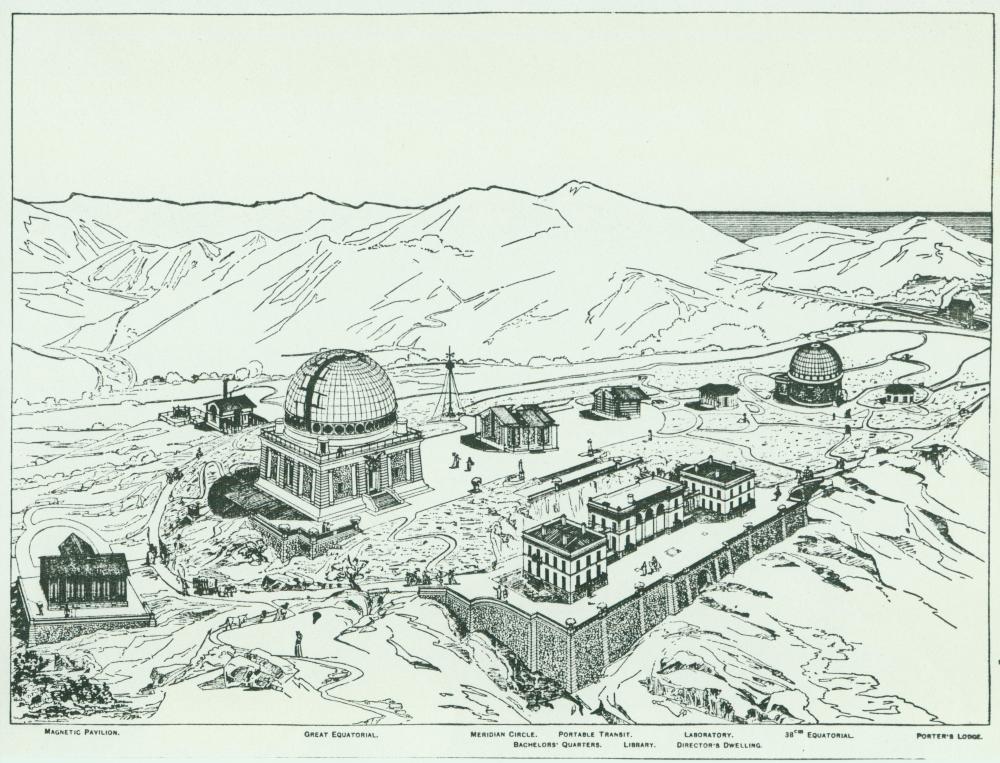
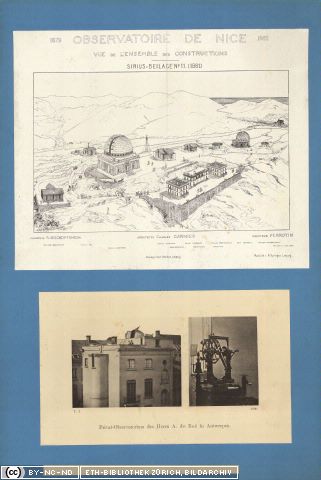
Fig. 1. Observatoire de Nice - Vue de l'ensemble des constructions -- Nice Observatory layout, drawing 1879 (Leipzig: H. Springer, photolithography, CC)
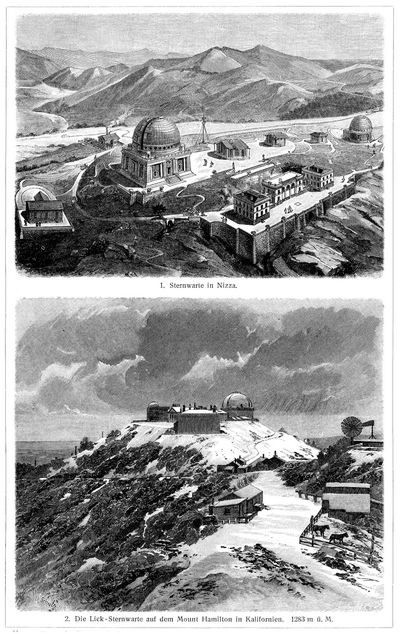
The Nice Observatory was initiated and sponsored in 1879 by Raphaël-Louis Bischoffsheim (1823--1906), located on Mont Gros, to the east of the city of Nice. The OCA has an outstanding architecture, the buildings (13 of the 18 pavilions) designed by Charles Garnier (1825--1898), the architect of the "Opéra de Paris" (1875).
On the west elevation of the library, a mosaic bears the following inscription: LAPLACE 1749-1827 -- ARAGO 1786-1853 -- LEVERRIER 1811-1877.
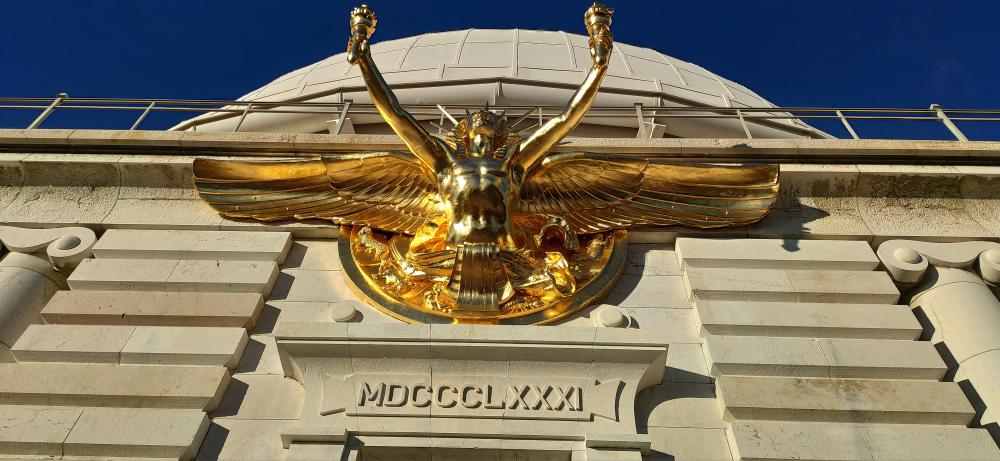
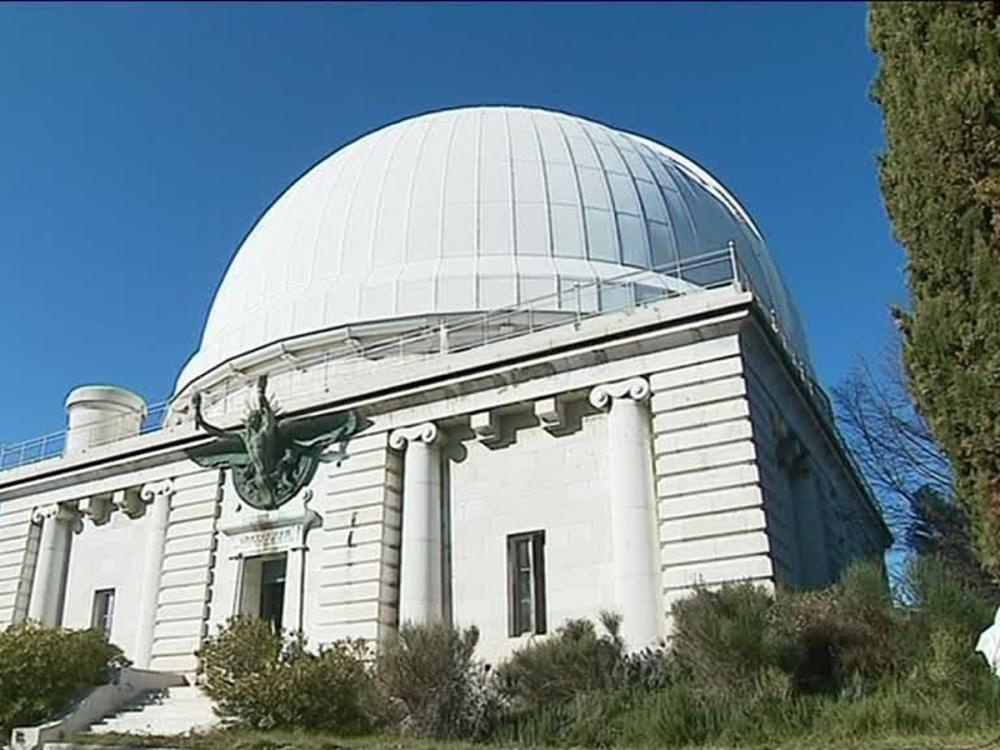
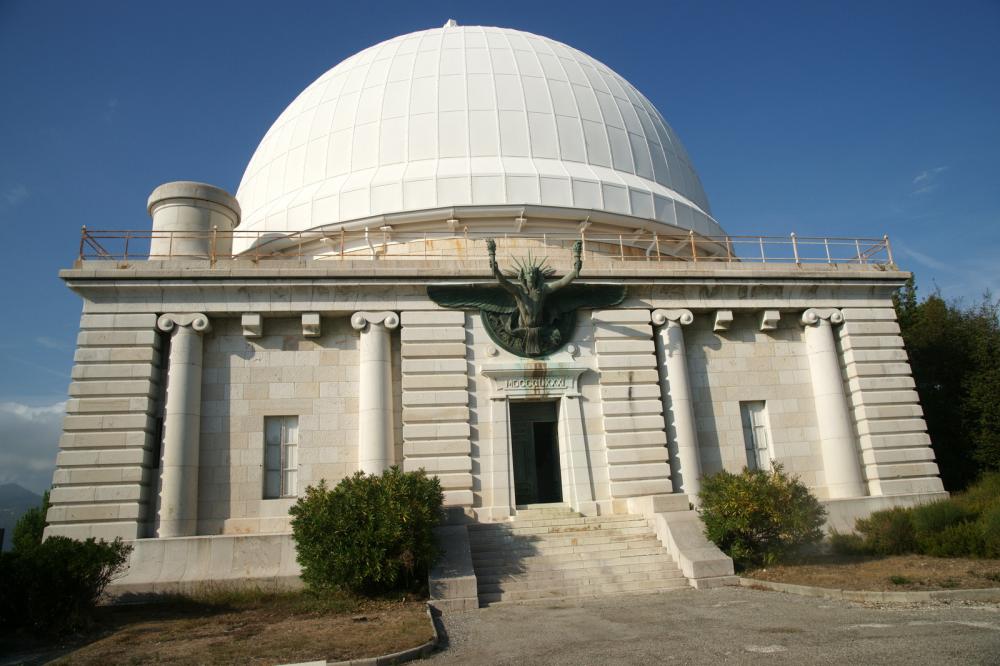
Fig. 2a. "Génie des Sciences" (Apollo Emerging from the Zodiac), Detail of the Grande Coupole de l'Observatoire de Nice (CC4, MANARAJu)
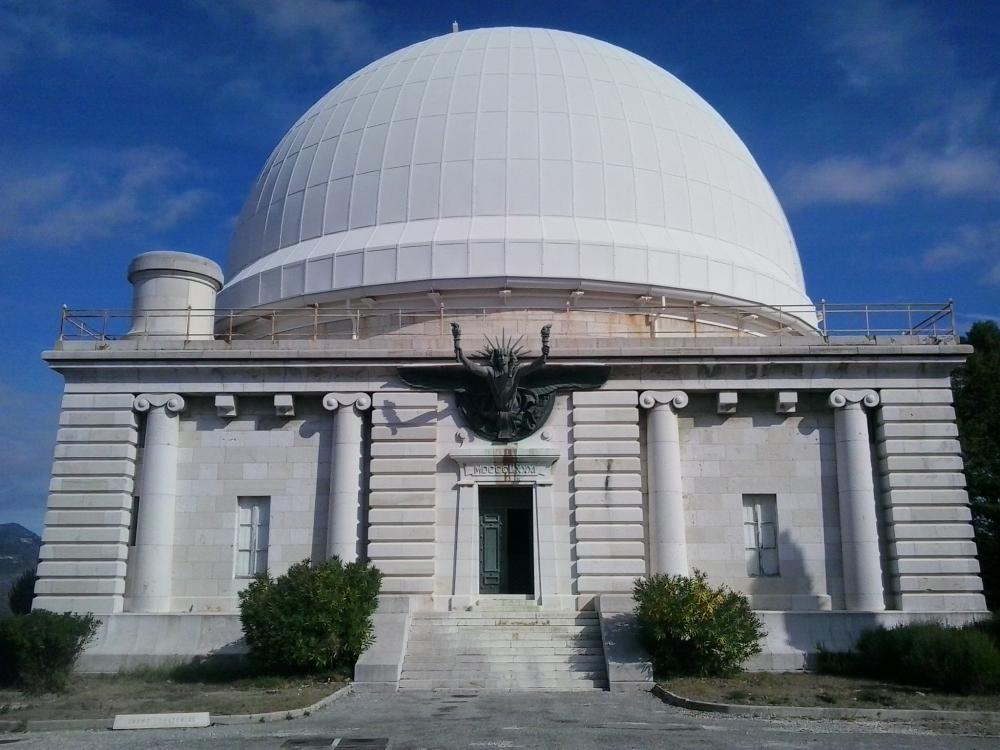
Fig. 2b. Dome of Nice Observatory, constructed by Gustave Eiffel (CC3, ClaireL28)
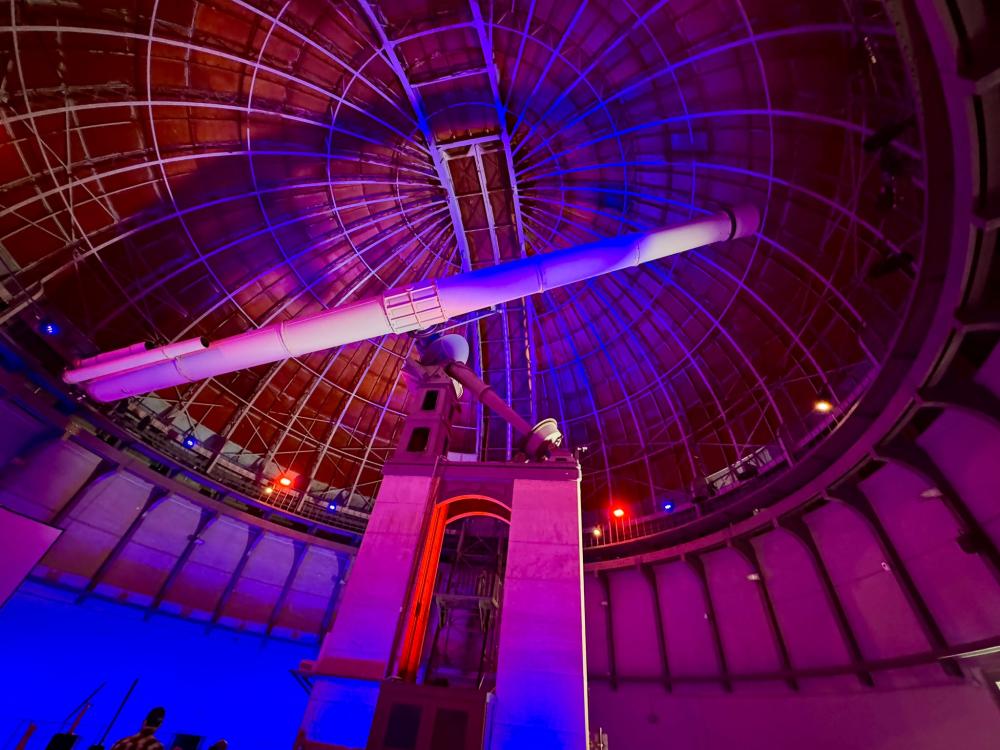
Very remarkable is the largest mobile 24-m-dome in Europe (weighing nearly 100 tonnes), designed by Gustave Eiffel (1832--1923) for the 76-cm-Grande Lunette. The building (1884-1887) - like a Temple of Science - has a square base with four perfectly symmetrical, identical facades, each accented by four Ionic columns. A distinctive feature is that the dome rests on an annular float-a trough containing water mixed with magnesium chloride to create a non-freezing solution. Charles Garnier modified the design to incorporate a parallel rotation system for the dome, utilizing rollers moving along rails. An electric motor was installed in 1888.
The OCA offers a remarkable scientific, historical, and natural heritage (a botanical garden and an olive grove with 250 trees).
Nice Observatory is Europe's oldest mountain observatory and was the first to be operated continuously, starting in 1881.
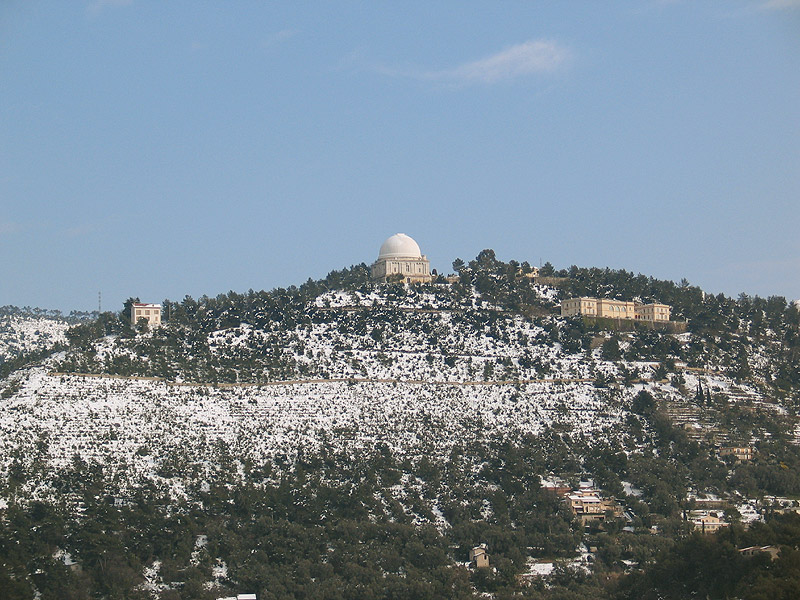
Fig. 3a. Nice Mountain Observatory (CC2.5, Nataraja)
History
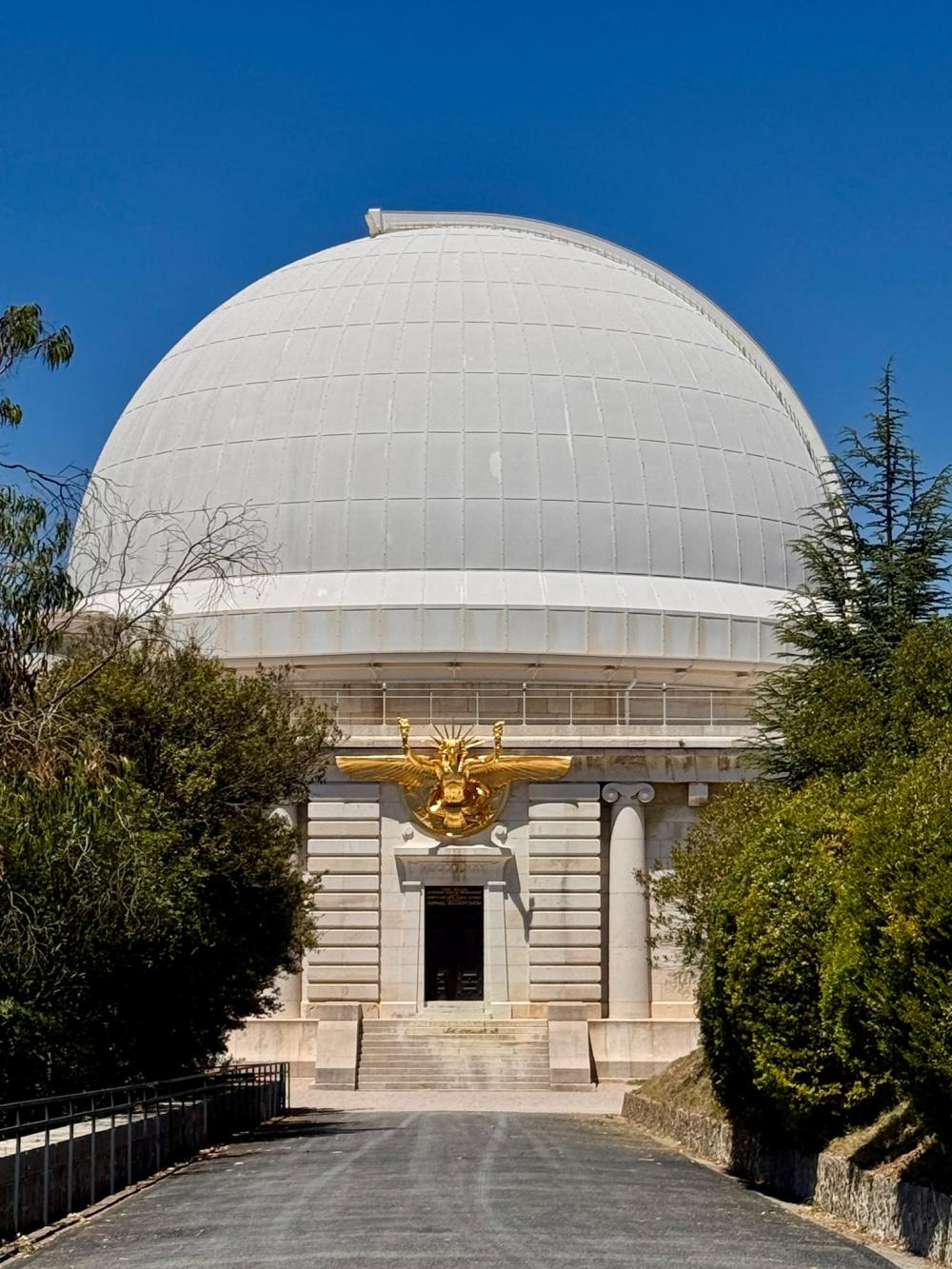
Fig. 4a. Dome of Nice Observatory (photo: Stephan Fichtner)
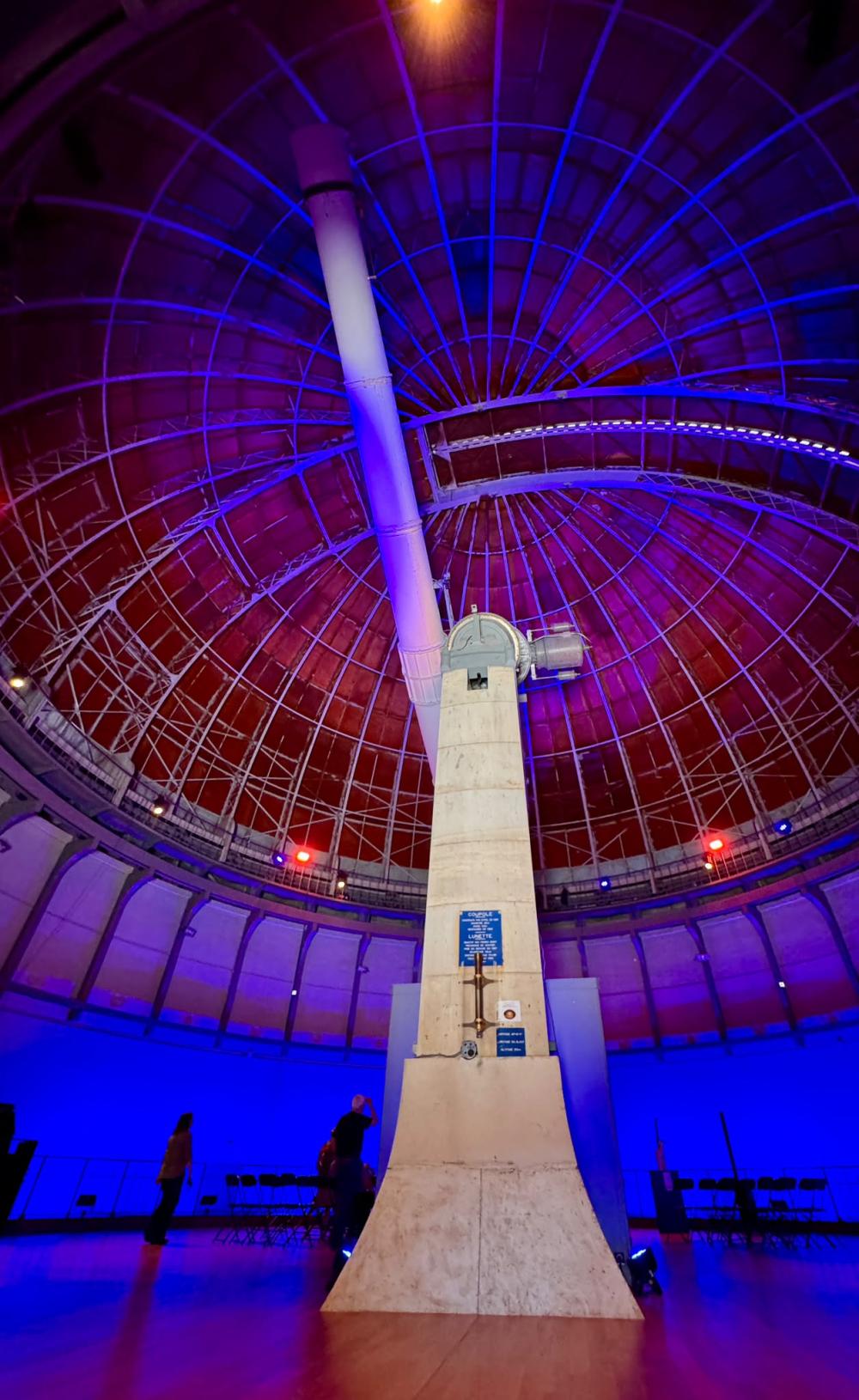
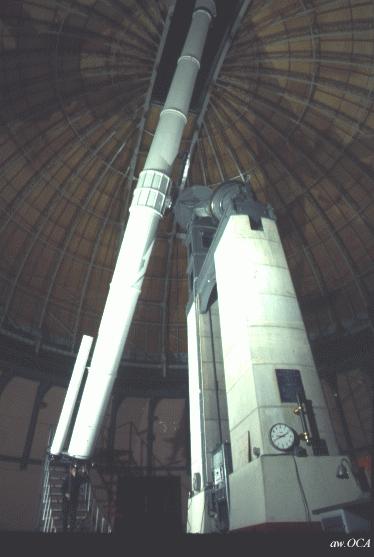
Fig. 4b. Grande Lunette (1888), 76-cm-Refractor of Nice Observatory (photo: Stephan Fichtner)
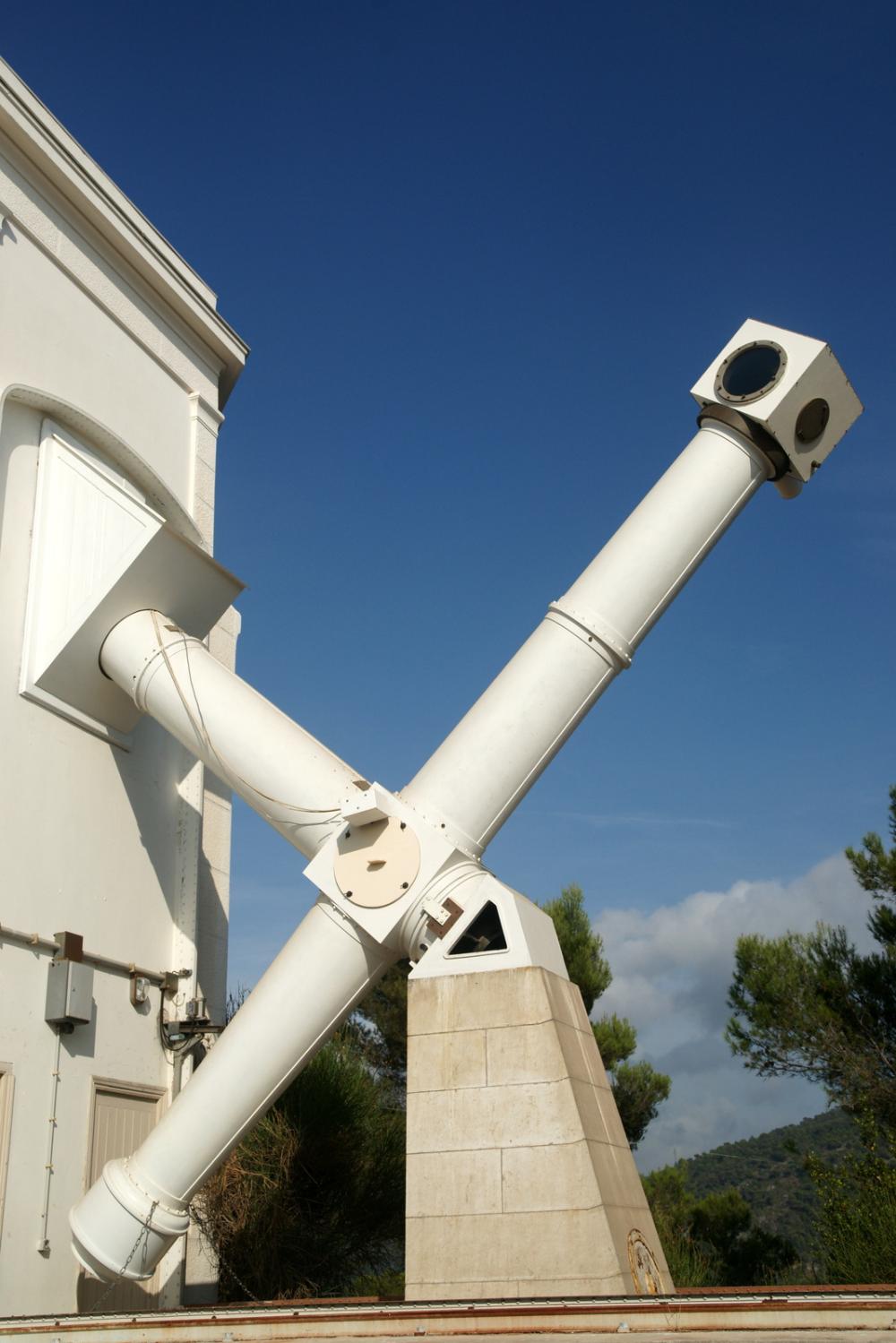
Fig. 5. Lunette coudée of Nice Observatory (CC4, Dacoucou)
Instruments of Nice Observatory/OCA
- Grande Lunette (1888), 76-cm-Refractor (30-inch, 18-m long), sheltered by a dome built by Gustave Eiffel. It represented, when it was built, the world's largest, longest, and highest (altitude (325m) refracting telescope. Only one year later, it was surpassed by the 91-cm-refractor at the Lick Observatory (1888/89).
- Small equatorial building with a 50-cm-equatorial instrument, used by Auguste Charlois (1864--1910) to discover 140 minor planets.
- Large Meridian building with its two sloped, zenith-opening roofs.
Associated with these buildings were "near marks" (reference targets) placed atop truncated obelisks made of limestone from La Turbie. A "far mark," located 6.5 km to the north on Mont Macaron in the commune of Cantaron, completed the setup. - Équatorial Coudé Telescope -- Lunette coudée (1892)
(bent-axis equatorial refractor)
"Between 1884 and 1892, no fewer than seven coudé equatorials were installed in France, Algeria and Austria. Invented by Maurice Loewy, these equatorials allowed the observer to sit comfortably in a closed room, with all the controls and readings at hand. However they were expensive, they required two flat mirrors, which were a source of concern because of their thermal distortion, and their mechanics was complex and delicate, so that they did not succeed in replacing the conventional equatorials in spite of their advantages. Only two are preserved, in Lyons and in Algiers. We describe in detail these instruments, their history and their use." (Lequeux, 2011)
The first famous instrument of this type, the Équatorial Coudé Telescope, was created in Paris (1891), introduced by Maurice Loewy (1833--1907).
Seven Coudé Équatorials were built between 1887 and 1893, by Paul Ferdinand Gautier (1842--1909) and the Henry brothers in Algiers, Besançon, Lyons, Paris (small and large), Nice, and University Observatory Vienna/Austria.[1][1] Vienna Observatory, Équatorial Coudé: aperture 38-cm, 25-m focal length, f/24, diameter of the plane-parallel mirror 54-cm, made by Gautier and the Henry brothers of Paris in 1890; the instrument was donated by Albert Salomon Baron von Rothschild in 1885; used by Adolf Hnatek (1876--1960) for research in spectrophotometry.
- Magnetic observation laboratory and a physics laboratory
- In 1931, as part of war reparations, the observatory received two new equatorial instruments, made by Carl Zeiss of Jena, for which Nice-based architect Honoré Aubert built two shelters.
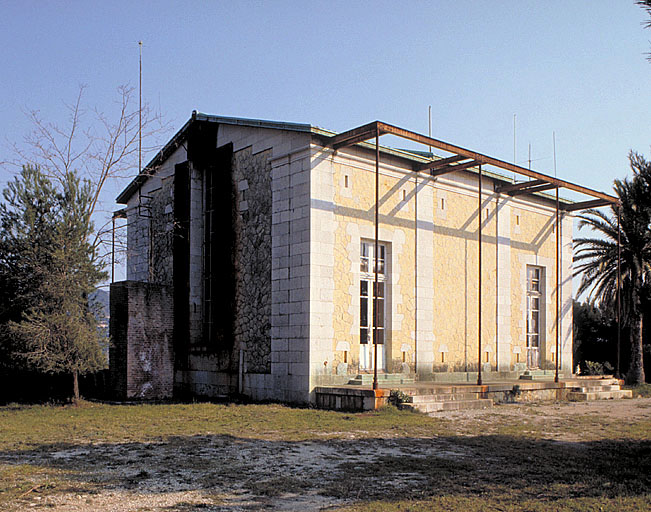
Fig. 6a. Meridian building of Nice Observatory (OCA)
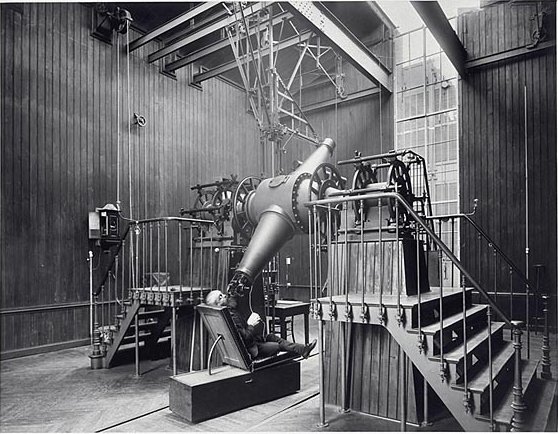
Fig. 6b. Meridian circle of Nice Observatory (OCA)
Modern Instruments at the Plateau de Calern Site
(Wikipedia)
- Schmidt telescope,
a 90-cm wide-field camera famously used to discover thousands of asteroids, and for imaging wide fields of view with limited aberrations was also intensely used until the early 2000s. - Interferometers (I2T and GI2T):
Developed under Antoine Labeyrie, these are specialized optical interferometers (the GI2T utilizes two 1.5-m-telescopes on movable tracks to achieve high angular resolution). - Lunar & Satellite Laser Ranging (LLR):
High-precision lasers that fire at the Moon and artificial satellites to measure distances with sub-centimeter accuracy. - GDIMM (Ground-based Differential Image Motion Monitor):
A fully automatic instrument that continuously monitors atmospheric turbulence and weather conditions.
Directors of Nice Observatory/OCA
- 1880 to 1904 -- Henri Joseph Anastase Perrotin (1845--1904)
- 1904 to 1917 -- General Jean-Antonin-Léon Bassot (1841--1917)
- 1917 to 1962 -- Gaston Fayet (1874--1967)
- 1962 to 1969 -- Jean-Claude Pecker (1923--2020)
- 1969 to 1972 -- Philippe Delache (1937--1972)
- 1972 to 1975 -- Jean-Paul Zahn (1935--2015)
- 1975 to 1975 -- Philippe Delache (1937--1972)
- 1975 to 1981 -- Jean-Paul Zahn (1935--2015)
- 1981 to 1989 -- Raymond Michard (1925--2015)
- 1989 to 1994 -- Philippe Delache (1937--1972)
- 1994 to 1999 -- José Pacheco (*1954)
- 1999 to 2009 -- Jacques Colin (....)
- 2009 to 2015 -- Farrokh Vakili (....)
- 2015 to 2021 -- Thierry Lanz (....)
- since 2021 -- Stéphane Mazevet
State of preservation
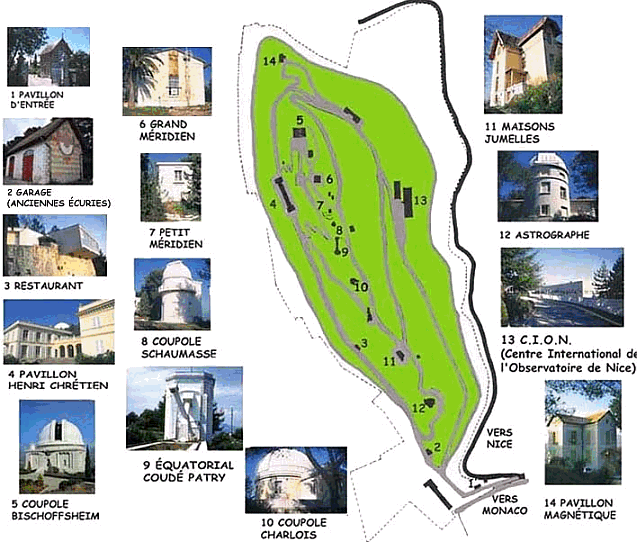
Fig. 7. Nice Observatory, site plan (CC)
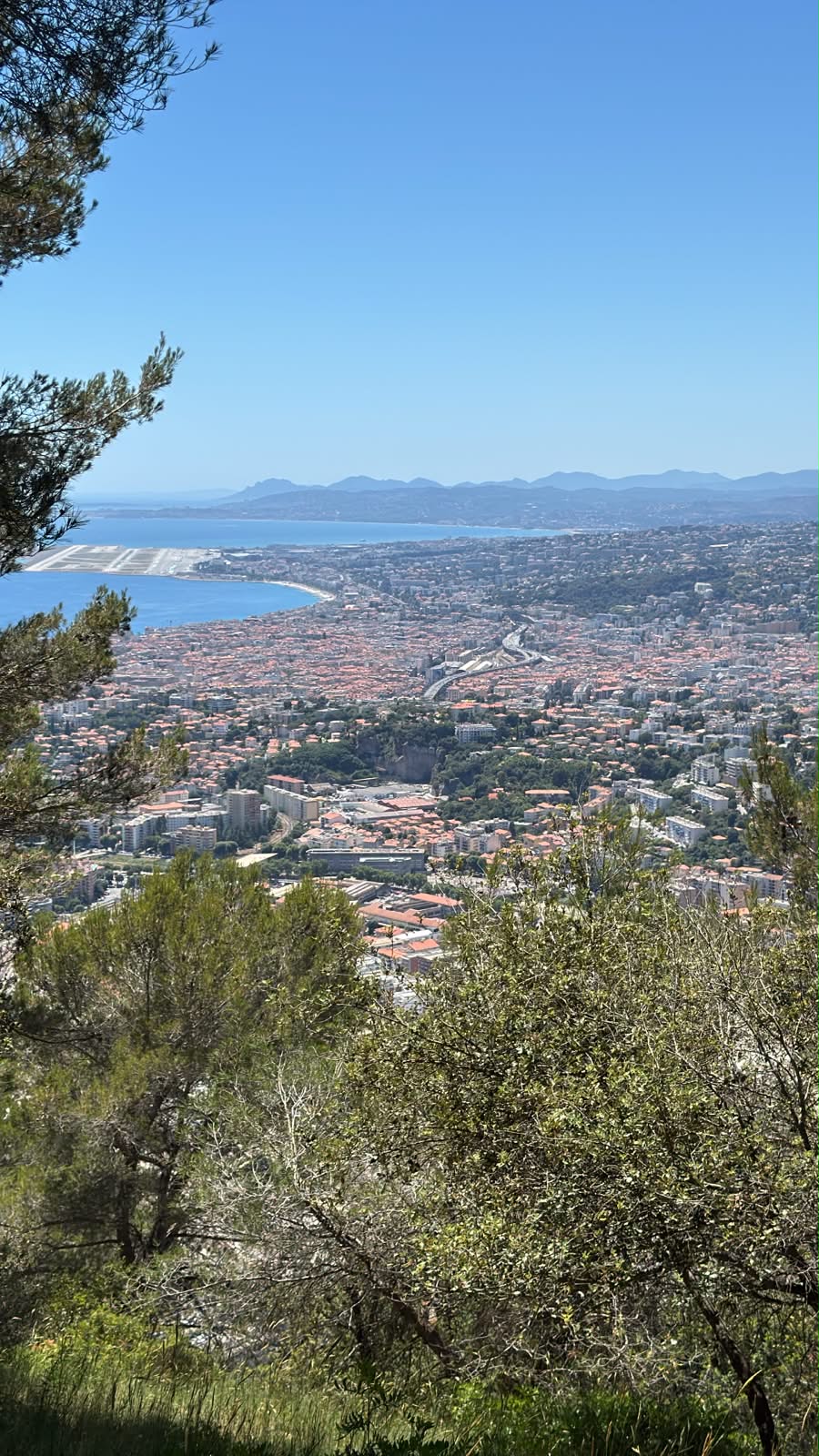
The Observatory of Nice is a listed historic building (October 24, 1994) on 35-hectare grounds with historic buildings, exceptional instruments, the astronomy park, and a unique panorama on Baie des Anges (Inscrit MH (1992), Classé MH (1994)).
On March 1, 2001, the observatory received the "20th Century Heritage" label (Patrimoine du XXe s).
(https://www.oca.eu/fr/site-mg-histpat/388-le-site-du-mont-gros-et-ses-protections).
The buildings were restored and renovated since 1963:
https://www.oca.eu/en/?view=article&id=3525:digitized-collections-history-of-the-nice-observatory-library&catid=257.
Comparison with related/similar sites
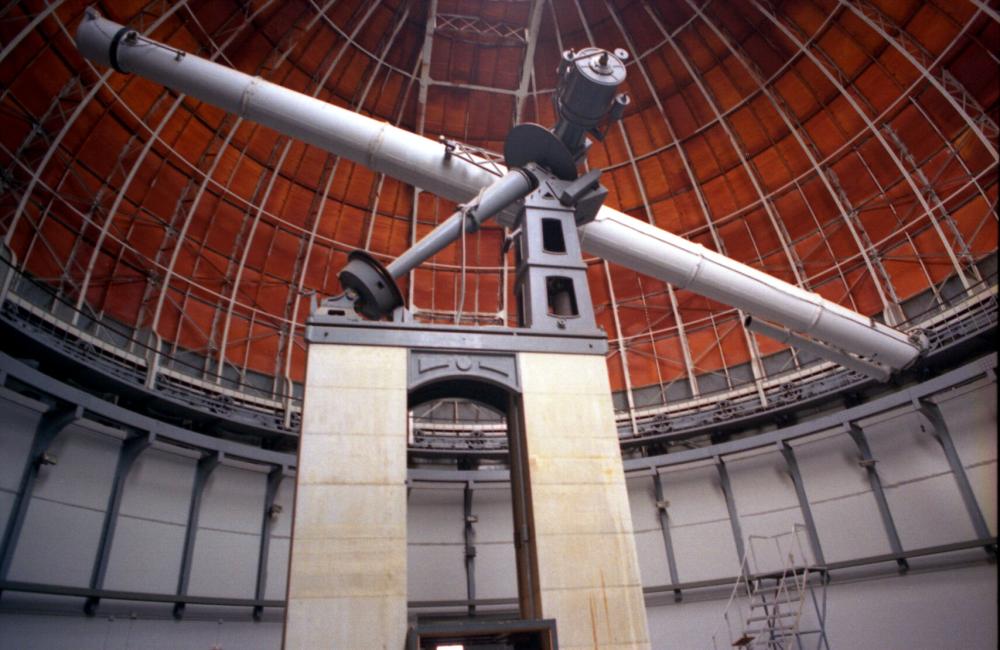
Fig. 8. Grande Lunette of Nice Observatory (CC3, Ericd)
- Large refractors: Grande Lunette 76-cm-Refractor (1888) --
Smaller than Nice: 76-cm at Pulkovo Observatory, St. Petersburg (1885), 68.5cm in Vienna University Observatory, Sir Howard Grubb, Parsons & Co in Newcastle-upon-Tyne (1878).
Larger than Nice: 91-cm-refractor (36-inch) at Lick Observatory (1889), at 1283m altitude. - OCA has one of the seven Coudé Équatorials, which were built between 1887 and 1893 -- discussed before. In 1871, it was invented by the Austrian-French astronomer Maurice Loewy (1833-1907), later director of Paris Observatory.
- Astronomy park:
Nice Observatory (1881) is a good example for an early "astronomy park" with separated buildings in a park, the villa and the -- unheated -- observation buildings/domes.
Other examples are: Strasbourg (1874, not a real parc, the large dome is still on the main building), La Plata, Argentina (1883), Remeis Observatory in Bamberg, Germany (1889), Uccle Observatory Brussels (1891), Heidelberg-Königstuhl (1898), EAO Kazan (1901), and Hamburg-Bergedorf (1906--1912) - the best example of this kind, it follows very strictly this park layout.
The famous US American observatories Lick Observatory (1888), Mount Wilson Observatory (1905) and Palomar Observatory (1948) also followed this modern idea of the layout of an observatory. - Mountain observatories, started by amateurs:
William Lassell (1799-1880) transferred his excellent self-built 61-cm (24-inch) reflecting telescope from Liverpool to Malta in 1852-1853. Charles Piazzi-Smyth (1819-1900) used a 71-inch telescope on the Peak of Tenerife in 1856. Pietro Tacchini (1838-1905), director of Palermo observatory, erected a solar observatory on the 2942-m high Mount Etna (decided in 1876, completed in 1882).
Lick Observatory on Mount Hamilton (1888) was the first permanent mountain observatory, and then Mount Wilson Observatory (1905).
Nice Observatory was built on the 372-m high Mont Gros, but with the advantage of being close to the city -- it was the first permanent "mountain" observatory in Europe (cf. Leguet-Tully et al. 2009). Algiers, the French Southern observatory in Africa, was installed on a 400-m high "mountain".
Around 1900, several European observatories were built at the border of cities on hills, e.g. first Pulkovo, St. Petersburg, on 75-m high hill, Potsdam, Heidelberg, and Hamburg (cf. Wolfschmidt 2002).
Threats or potential threats
no threats
Present use
The OCA is used for astronomy, geoscience, and public outreach (it offers an interactive Universarium space).
See also: https://www.oca.eu/en/observational-services.
Astronomical relevance today
OCA, connected to Nice Sophia Antipolis University (UNS), is an internationally recognized center for research in Earth Sciences and Astronomy:
"The OCA is one of 25 French astronomical observatories responsible for the continuous and systematic collection of observational data on the Earth and the Universe. Its role is to explore, understand and transfer knowledge about Earth sciences and astronomy, whether in astrophysics, geosciences, or related sciences such as mechanics, signal processing, or optics."
Observatoire de la Côte d'Azur (OCA) -- created in 1988, as a merger of the following observatories:
- Observatoire de Nice
- Centre de Recherches en Géodésie et Astrométrie (CERGA), 1988, formerly in Grasse (1974-2012).
- Calern Observatory (Schmidt telescope, interferometric telescopes GI2T, and 1m-telescope for Laser to the Moon), 2130 route de Caussols, F-06460 Caussols.
The OCA has branch observatories not only on the Plateau de Calern, but also in California, Antarctica, and South America).
References
Bibliography (books and published articles)
- Asensio, Paco (ed.): Gustave Alexandre Eiffel. Düsseldorf: teNeues 2003, p. 64-69.
- Bonillo, Jean-Lucien: Les Riviera de Charles Garnier et Gustave Eiffel. Marseille: Editions Imbernon 2004.
- Davoigneau Jean & Françoise Leguet Tully: Observatoire de Nice, puis Observatoire de la Côte d'Azur. Notice IA06000862 added to the Architectural Heritage Database (Mérimée) in 2001, revised in 2011 - © Inventaire général, Région Provence-Alpes-Côte d'Azur - POP [Plateforme Ouverte du Patrimoine], a database from the French Ministry of Culture: https://www.pop.culture.gouv.fr/notice/merimee/IA06000862
- Folli, Andrea & Merello Gisella: Charles Garnier et la Riviera. Genova: Erga edizioni 2000, p. 147-152.
- Fulconis, Michel: Raphaël Bischoffsheim, l'homme qui a offert à la France le plus grand observatoire du Monde. Paris: Éditions Regards du Monde 2003.
- Garnier, Charles: Monographie de l'observatoire de Nice. Paris: Librairie général de l'architecture et des travaux publics André Daly fils & cie 1892.
- Howard-Duff, Ian: Short histories of six French observatories, comprising short histories of the observatories of Lyon (1878--1983) (7 pages), Meudon (1876--1983) (9 pages), Nice (1881--1983) (16 pages), Paris (1667--1983) (20 pages), Besançon (1878--1984) (5 pages), and Haute-Provence (1943--1984) (10 pages).
- Leguet-Tully, Françoise: Chronologie de l'observatoire de Nice 1860-1962: des prémisses de sa création à son renouveau. In: Bulletin de l'ADION (1992-1993), n. 27, p. 31.
- LeGuet-Tully, Françoise; Sadsaoud, Hamid & Marc Heller: La création de l'observatoire d'Alger. In: Musée des Artes et Métiers, La revue 38 (2003), p. 26-35.
- LeGuet Tully, Françoise: The Nice Observatory -- An Exceptional Commission. In: Jean-Lucien Bonillo et al.: Charles Garnier and Gustave Eiffel on the French and Italian Rivieras -- The Dream of Reason. Marseille: Editions Imbernon 2004, p. 15-42.
- LeGuet-Tully, Françoise & Jean Davoigneau: The 19th-century observatory today. From astronomical instrument to cultural and scientific symbol. In: Grob, Bart & Hans Hooijmaijers (eds.): Who needs Scientific Instruments. Leiden: Museum Boerhaave 2005, p. 57-64.
- LeGuet Tully, Françoise: Raphaël Bischoffsheim und die Gründung eines astronomischen Observatoriums an der französischen Riviera. In: Wolfschmidt, Gudrun (ed.): Astronomisches Mäzenatentum. Proceedings des Symposiums in der Kuffner-Sternwarte in Wien, 7.-9. Oktober 2004: "Astronomisches Mäzenatentum in Europa". Norderstedt: Books on Demand (Nuncius Hamburgensis - Beiträge zur Geschichte der
Naturwissenschaften; Band 11) 2008, p. 111-129. - Leguet-Tully, Françoise & Hamid Sadsaoud: Astronomical Heritage Sites: Two Early "Mountain" Observatories on the Mediterranean Coast. In: Wolfschmidt, Gudrun: Cultural Heritage of Astronomical Observatories -- From Classical Astronomy to Modern Astrophysics. Proceedings of International ICOMOS Symposium in Hamburg, October 14--17, 2008. Berlin: hendrik Bäßler-Verlag (International Council on Monuments and Sites, Monuments and Sites XVIII) 2009, p. 204-209.
- Michard, Raymond: Le premier siècle de l'Observatoire de Nice. Nice-Historique (1989), no 181, p. 33-35.
- Roussel, Bertrand & Frédéric Boyer (préf. Camille Béguin): Patrimoine historique - Les 70 sites majeurs des Alpes-Maritimes, Saint-Laurent-du-Var. Saint-Laurent-du-Var: Éditions Mémoires Millénaires 2025, p. 124-125.
- Wolfschmidt, Gudrun: Early German Plans for a Southern Observatory. JENAM 2001 Munich special colloquium ''Astronomy in Europe in the 20th century''. Ed. by Hilmar W. Duerbeck et al. In: Astronomische Nachrichten 323 (2002), 6, p. 546-552.
Links to external sites
- Digitized collections - History of the Nice observatory library (3 February 2025)
- Building knowledge through technological innovation (21 May 2025)
- National Observation Services (27 January 2026)
- Astronomy, astrophysics and geophysics (18 July 2022)
- Digitized collections - Biographies (19 January 2026)
- Le mystère de l'Apollon - roman photo (18 Octobre 2022)
- Le site du Mont-Gros et ses protections (29 Novembre 2022)
- Observatoires astronomiques Provence -- Alpes -- Côte d'Azur
Links to external on-line pictures
no information available